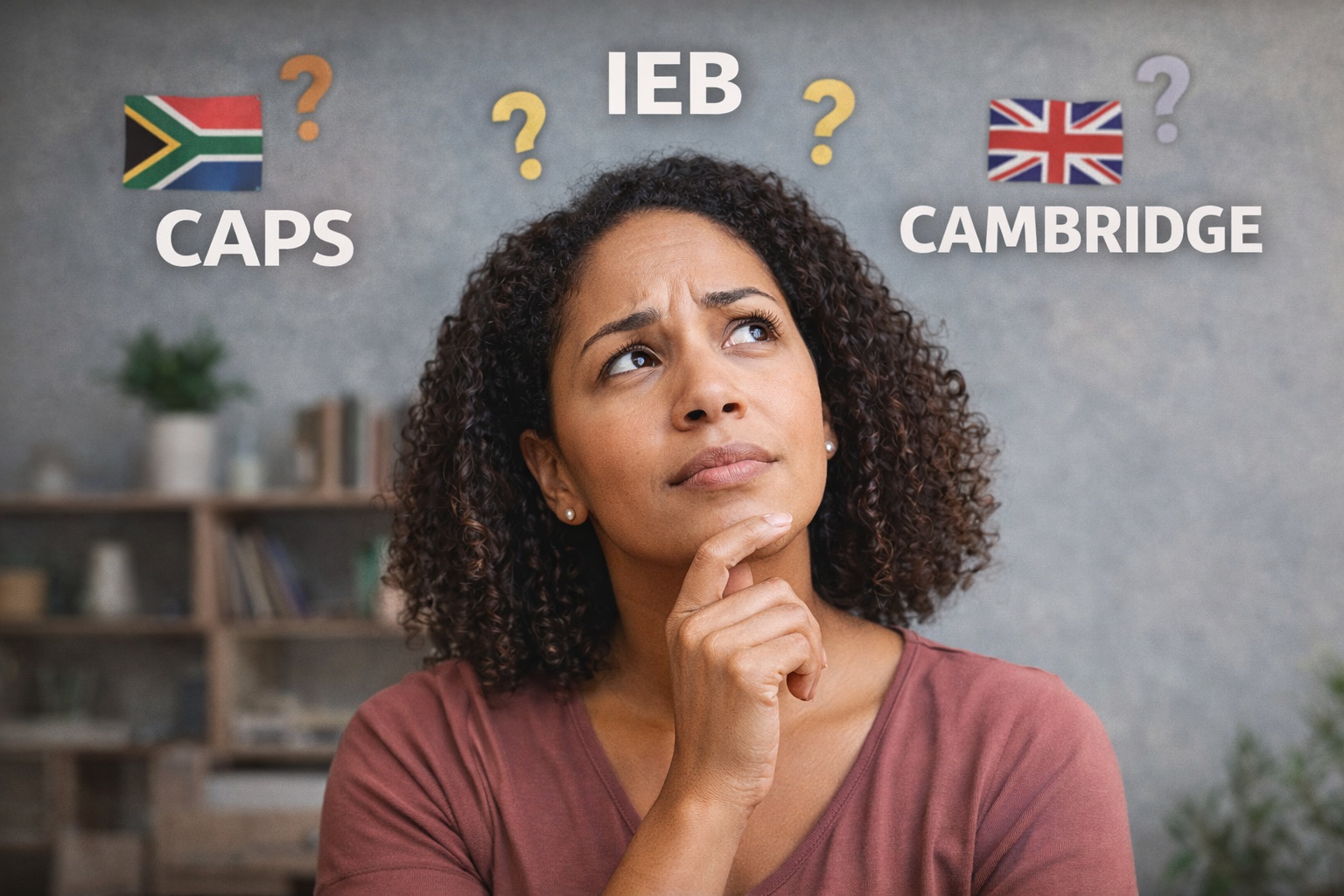

Why Parents Ask This Question
Most parents only start asking about tutoring costs once something is already going wrong. Marks are slipping, confidence is fading, or the workload has suddenly increased. At that point, the question is not academic curiosity. It is practical: What will this cost, and is it worth it?
The difficulty is that tutoring prices in South Africa vary widely, and without context, the numbers alone do not mean much.
Typical Price Ranges You Will Encounter
While there is no official pricing structure, most private tutoring in South Africa falls into the following ranges:
-
R150–R250 per hour
Commonly university students or recent graduates. Support is usually homework-focused or short-term.
-
R250–R400 per hour
More experienced tutors with subject focus. Sessions often include concept explanation, exam preparation, and structured practice.
-
R400–R700+ per hour
Specialist tutors, senior educators, or curriculum-specific experts, particularly for IEB, Cambridge, and senior grades.
These figures are influenced by subject, grade, curriculum, and whether sessions are online or in person.
What You Are Actually Paying For
Hourly rate is only a surface-level measure. The real cost of tutoring is determined by what happens during the session.
Key cost drivers include:
-
Depth of subject knowledge
-
Familiarity with the learner’s curriculum
-
Ability to diagnose underlying problems
-
Session structure and progression over time
Two tutors charging the same rate can deliver vastly different outcomes. One may repeat classroom explanations. Another may identify a missing foundational skill that has been limiting progress for months.
When Cheaper Tutoring Becomes Expensive
Lower-cost tutoring can be effective for short-term needs, such as keeping up with homework or revising for a specific test.
However, when a learner is consistently underperforming, the issue is rarely incomplete work. It is more often:
-
Gaps in foundational understanding
-
Weak problem-solving habits
-
Poor exam technique
-
Loss of confidence
In these cases, repeating content without addressing the root cause leads to slow progress and prolonged tutoring. What appears affordable per hour can become costly over time.
Online vs In-Person: Does Cost Equal Quality?
Online tutoring is generally more affordable and more flexible. It removes travel time and allows access to subject specialists regardless of location.
In-person tutoring tends to cost more due to logistics, but some learners benefit from face-to-face interaction, particularly in younger grades.
Neither format guarantees success. Effectiveness depends on how well the tutoring is structured and aligned to the learner’s needs.
How Parents Should Think About Value
A more useful way to assess tutoring is to ask:
-
Is the tutor identifying why marks are being lost?
-
Is there a clear plan, or are sessions reactive?
-
Is the learner gaining confidence as well as marks?
Tutoring that produces clarity and independence often requires fewer hours than tutoring that simply keeps a learner afloat.
How LevelUp Approaches the Question of Cost
At LevelUp, tutoring is not treated as a commodity sold by the hour. The focus is on understanding what the learner actually needs before deciding what support looks like.
This means:
-
Diagnosing whether the issue is conceptual, procedural, or exam-related
-
Aligning support with CAPS, IEB, or Cambridge expectations
-
Building skills that reduce long-term dependence on tutoring
In many cases, the most cost-effective intervention is not the cheapest option, but the one that addresses the problem correctly and early.
Tutoring is not about buying time. It is about buying clarity.
If you would like to see our current tutoring price ranges, you can view our pricing page for an overview. For more specific guidance, parents are welcome to speak directly with our administrators using the WhatsApp button below.