
How to Improve Physical Sciences Marks in High School
Physical Sciences is one of the most misunderstood subjects in high school. Many learners work hard, attend class, and complete homework, yet their marks remain stubbornly low. This often leads parents to assume the subject is “too difficult” or that the learner is “not a science person.”
In reality, most Physical Sciences marks are lost not because of intelligence, but because learners approach the subject incorrectly. Physical Sciences does not reward effort alone. It rewards how a learner studies, practices, and applies concepts under exam conditions.
Understanding Why Marks Are Lost
Physical Sciences is a combination of conceptual understanding, mathematical application, and exam technique. Weakness in any one of these areas can pull marks down significantly.
Many learners focus on memorising formulas without understanding where they come from. Others understand concepts but struggle to translate them into calculations. Some know the work but lose marks through poor interpretation of questions, incorrect units, or weak explanations.
Improving marks therefore requires fixing the process, not just increasing study time.
Step 1: Fix Conceptual Understanding First
Physical Sciences concepts build on one another. If earlier ideas are weak, later topics become confusing very quickly. Learners often try to push forward without repairing these gaps.
Improvement begins when learners:
-
Understand why formulas work, not just how to use them
-
Can explain concepts in simple language
-
See links between theory and calculations
Without this foundation, extra practice produces diminishing returns.
Step 2: Learn How to Practice Properly
Many learners “practice” by re-reading notes or watching solution videos passively. This creates familiarity, not competence.
Effective practice in Physical Sciences involves:
-
Solving questions without looking at solutions first
-
Writing full, logical steps (even when answers are wrong)
-
Practising mixed questions, not only topic-by-topic drills
Marks improve when learners learn to think under pressure, not when they recognise answers.
Step 3: Improve Exam Technique
A significant portion of Physical Sciences marks is lost due to avoidable exam errors. These include:
-
Incorrect units or missing units
-
Poor diagram interpretation
-
Incomplete explanations
-
Weak command of scientific language
Learners must be taught how examiners allocate marks and what they look for in written responses. Knowing the content is not enough. Learners must show it in the expected way.
Step 4: Adjust the Approach to the Curriculum
Different curricula place different demands on learners.
-
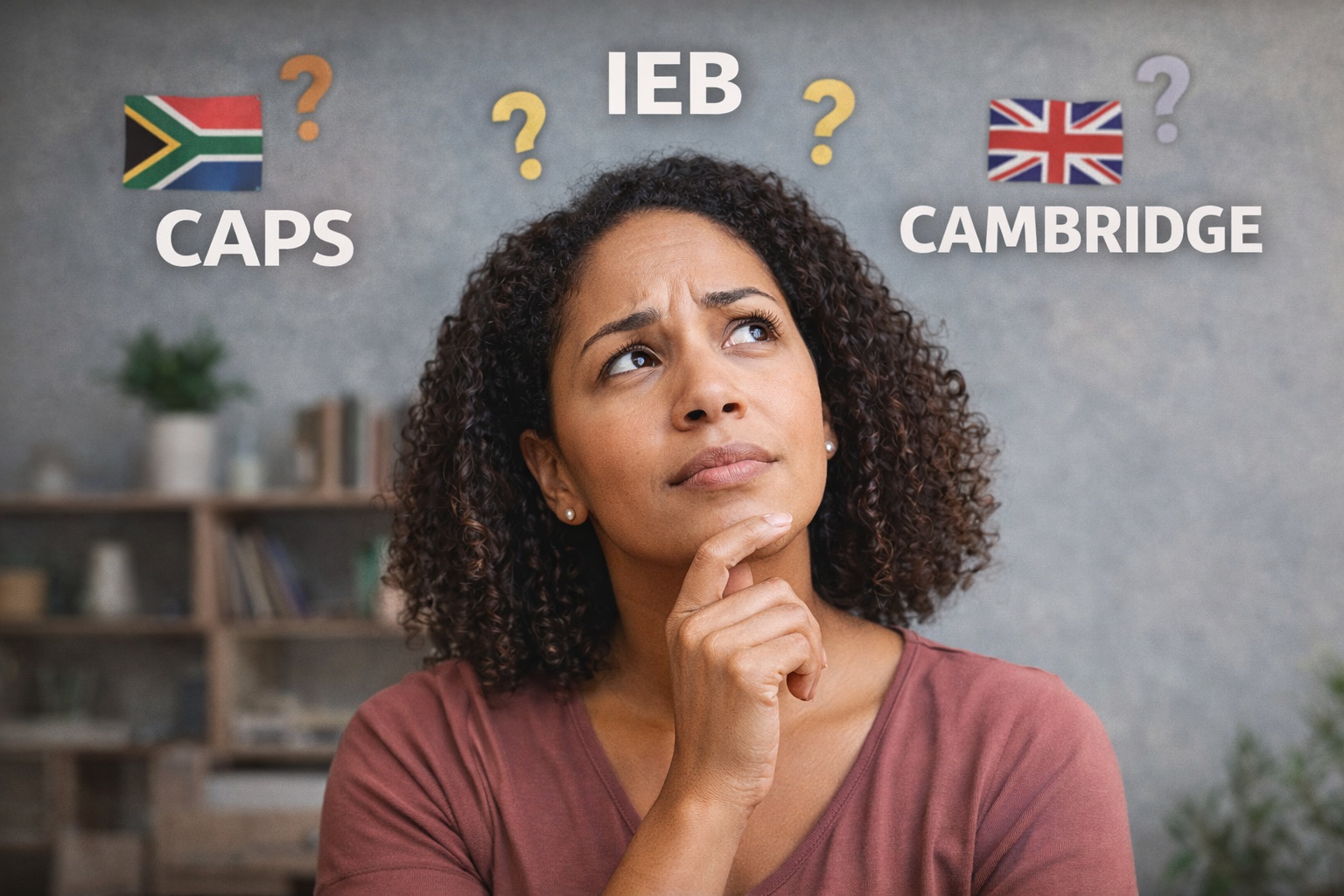
CAPS rewards accuracy, method, and consistency. Learners must master standard question types and avoid careless errors.
-
IEB requires clearer explanations and application of knowledge in less predictable contexts.
-
Cambridge demands strong conceptual understanding and independent problem-solving.
Improvement strategies must match the curriculum. A one-size-fits-all approach does not work.
The Verdict: What Actually Improves Marks
Physical Sciences marks improve when:
-
Conceptual gaps are identified and closed early
-
Practice is active, not passive
-
Learners are taught how to answer questions, not just what to study
-
Support is aligned with curriculum expectations
Most learners do not need to change subjects or schools. They need structured academic support that targets the real weaknesses holding their marks back.
Where LevelUp Fits In
This is where LevelUp plays a critical role.
LevelUp works with learners across CAPS, IEB, and Cambridge Physical Sciences. Our focus is not volume of work, but quality of understanding. We help learners:
-
Diagnose exactly where marks are being lost
-
Build strong conceptual foundations
-
Learn effective problem-solving strategies
-
Develop exam technique aligned to their curriculum
We also help parents understand whether a learner’s struggle is due to content gaps, poor study habits, curriculum mismatch, or lack of exam skills.
In many cases, the difference between average and strong performance is not more effort, but better guidance.
Physical Sciences is not about being “naturally good” at science. It is about being taught how to think, practise, and apply knowledge correctly.